
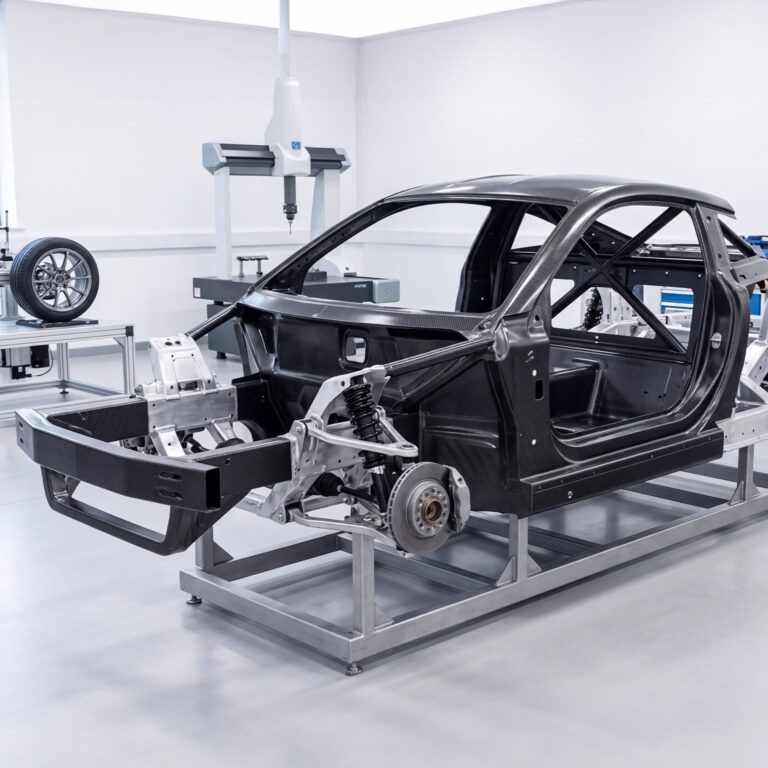
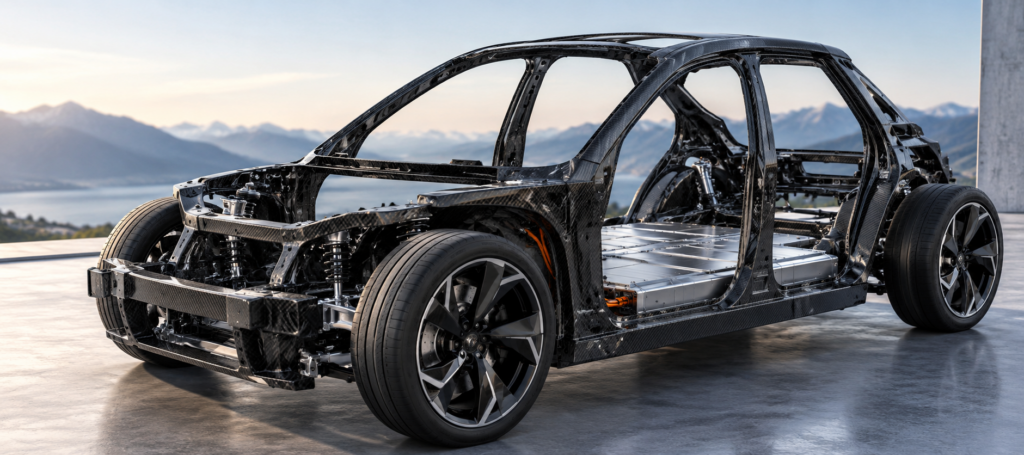
Range extension through mass reduction In an EV, every kilogram removed from the body or chassis is a kilogram the battery doesn't have to move. Lighter structures mean either extended range on the same pack, or a smaller pack for the same range, which then saves further weight. That compounding effect is why EV programmes look at composite structures earlier in development than combustion platforms typically did.
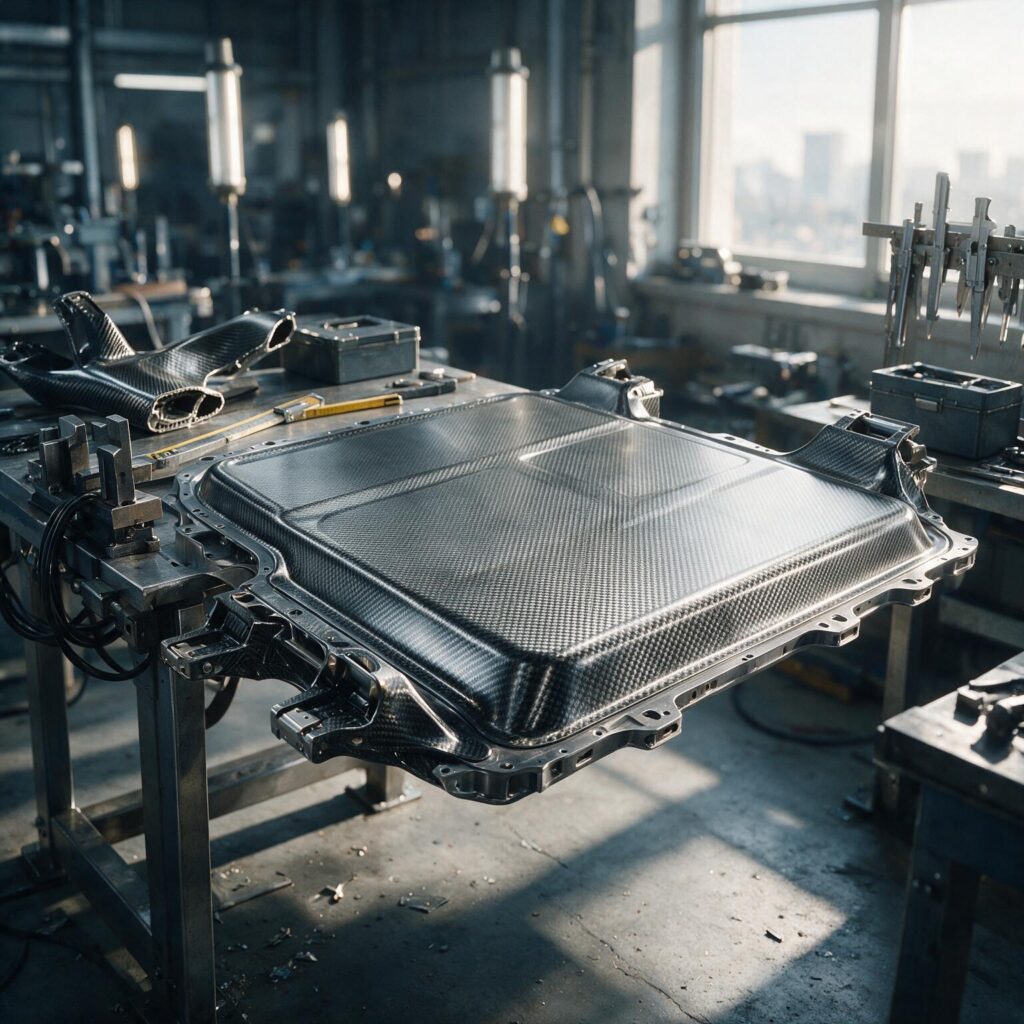
Battery enclosure protection without the mass penalty Battery enclosures need to survive intrusion events, resist thermal propagation, and protect the pack through the vehicle's service life, all while adding as little mass as possible to a component that already sits at the bottom of the vehicle. CFRP laminates and machined panels give programme teams a structural enclosure option that meets impact requirements at a fraction of the weight of a steel or aluminium equivalent.
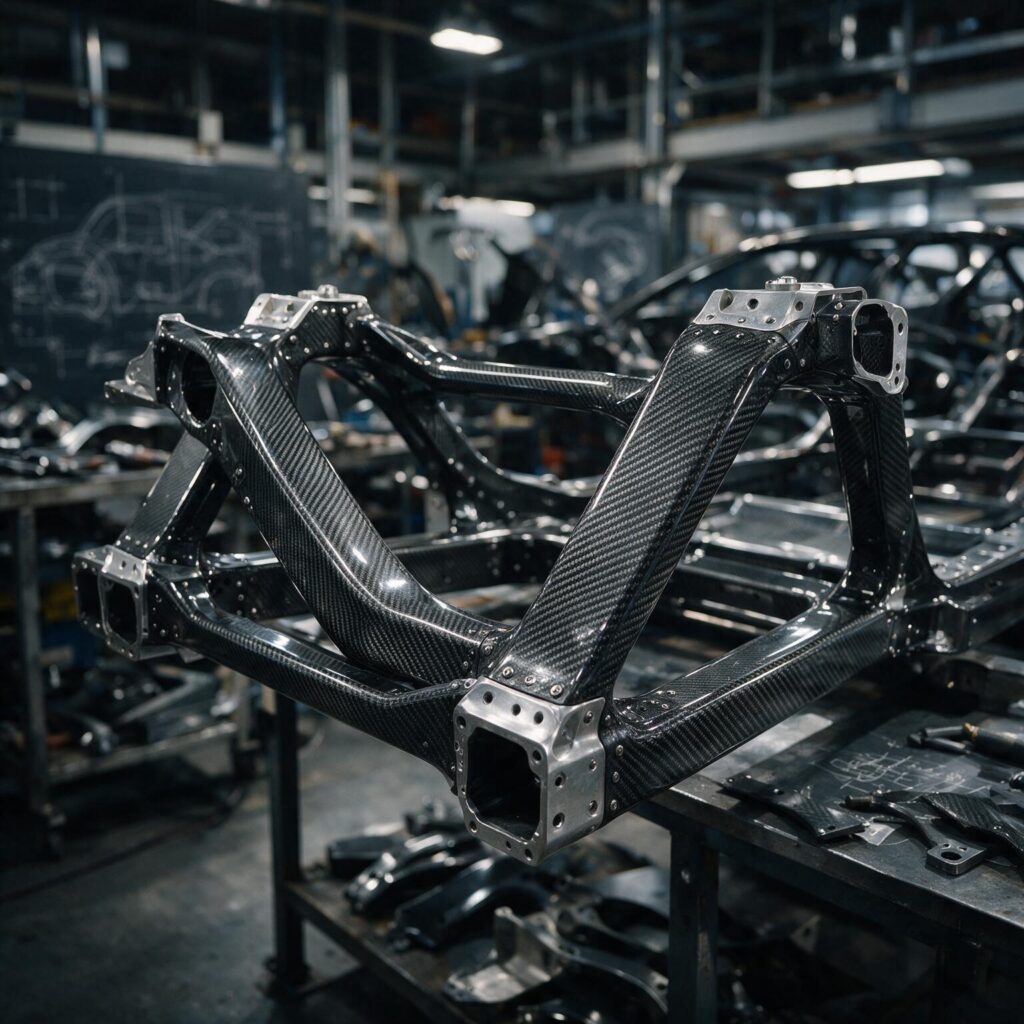
Chassis and structural stiffness for handling and safety Torsional stiffness affects handling, NVH, and how predictably a chassis behaves under load. Carbon fiber tubes and structural members increase stiffness per unit mass well beyond what metal sections achieve, which is why motorsport monocoques, roll cage elements, and structural reinforcement bracing rely on CFRP construction.
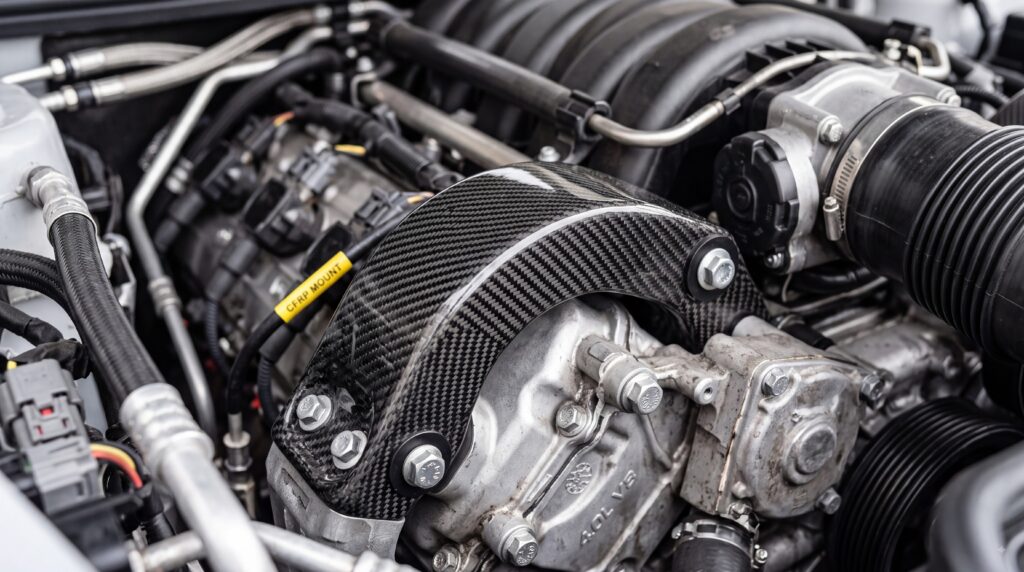
Vibration damping and NVH performance Carbon fiber composites damp vibration differently than metal. The fiber and matrix structure absorbs energy rather than transmitting it cleanly through the section, which is part of why composite body panels and structural members contribute to a quieter cabin and reduced harshness at the component level.
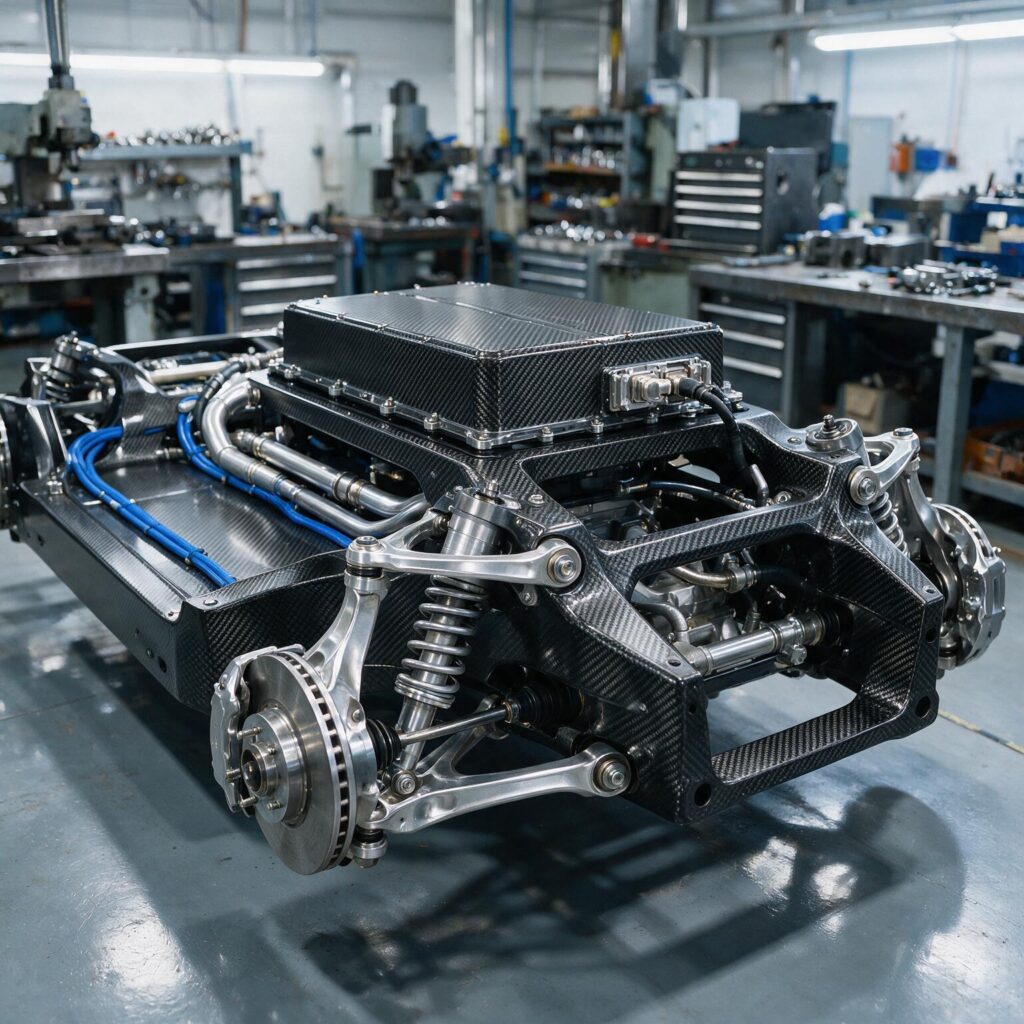
Fatigue life under repeated dynamic loading Suspension components, drivetrain elements, and structural brackets see millions of load cycles over a vehicle's life. Carbon fiber composites resist fatigue degradation in a way that metal components eventually cannot, which matters for any component engineered around a long service life or a demanding duty cycle, including motorsport applications run across a full season.
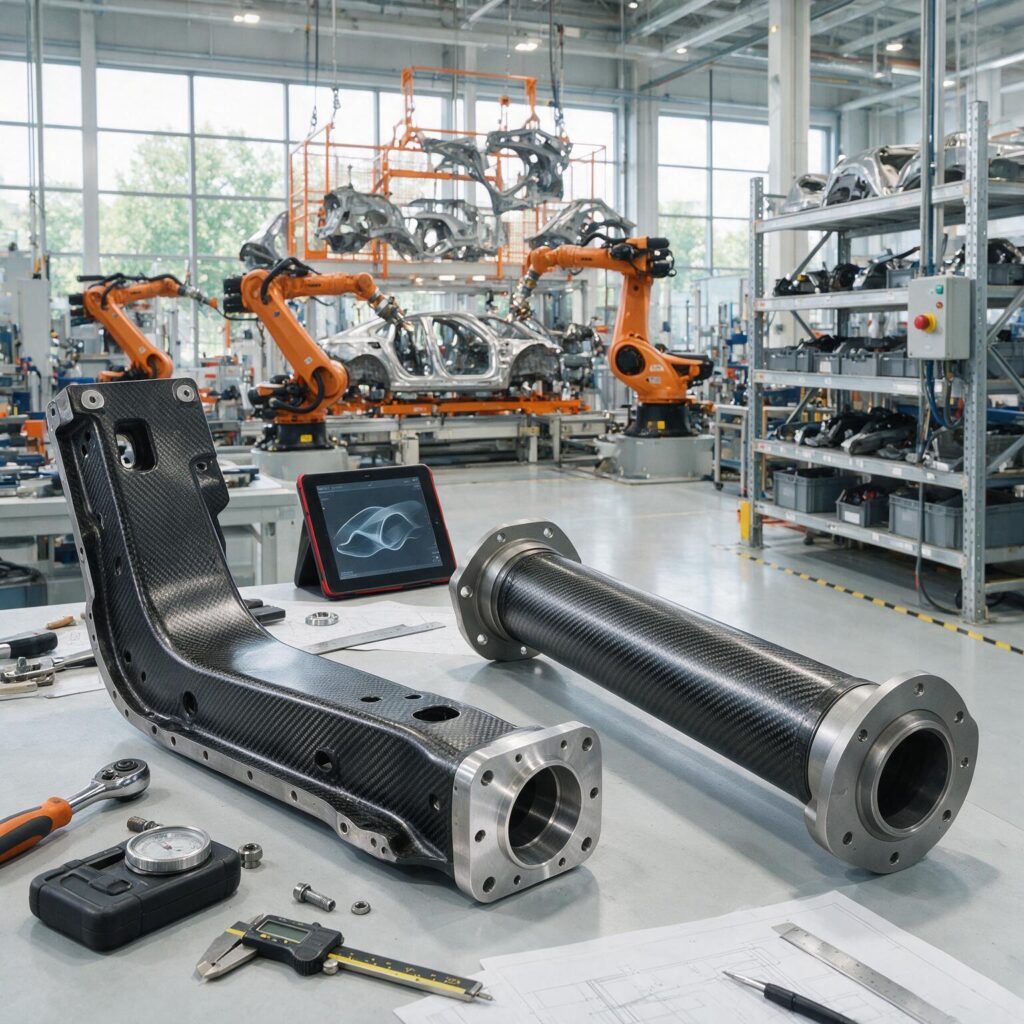
Prepreg Carbon Fiber Tubes for Structural Applications
Prepreg Carbon Fiber Tubes for Structural Members and Chassis Elements Tubes form the backbone of roll cages, structural bracing, torque tubes, and driveshaft applications where torsional stiffness and low rotating mass both matter. We manufacture round and profiled CFRP tubes in controlled batches with tight dimensional tolerances, so every unit across a production run behaves the same way under load.
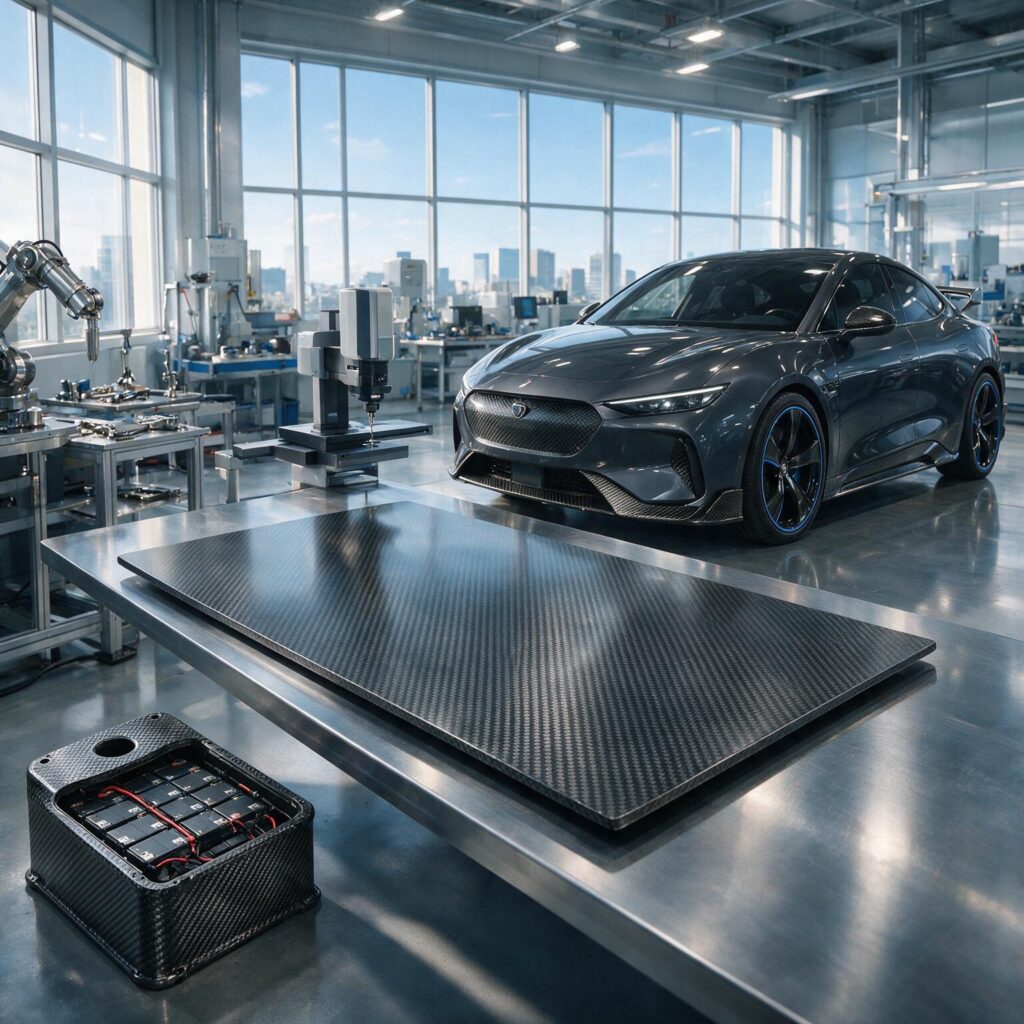
Carbon Fiber Sheets and Laminates for Structural Applications
Carbon Fiber Sheets and Laminates for Body Panels and Battery Enclosures Flat and formed CFRP laminates are used for body panels, floor structures, and battery enclosure panels where stiffness, impact resistance, and low mass all need to coexist. We supply sheets and laminates across a range of thicknesses and modulus grades depending on the structural requirement.
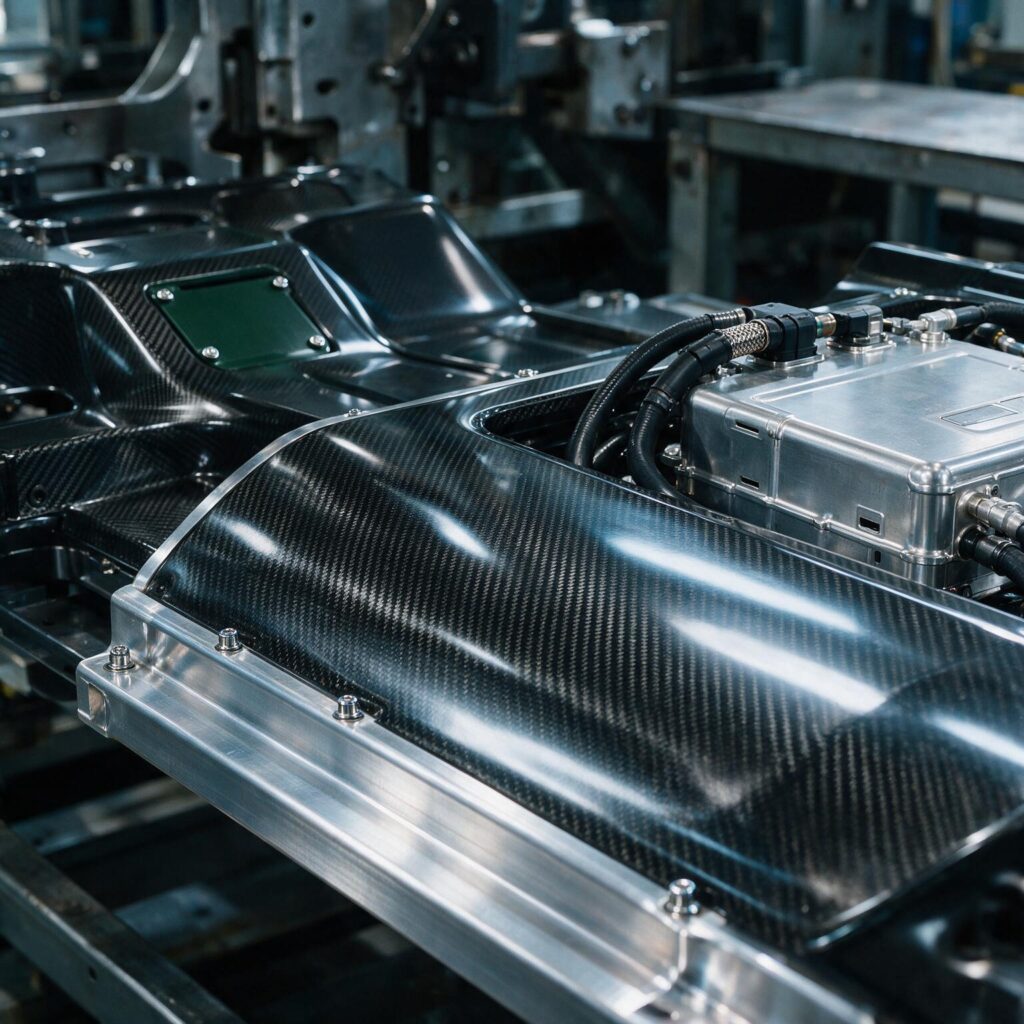
Pultruded Carbon Fiber Rods for Structural Reinforcement
Pultruded Carbon Fiber Rods for Reinforcement and Bracing Pultruded rods deliver high axial stiffness in a compact cross-section, which makes them suited to reinforcement bracing, structural stiffeners, and applications where a component needs targeted rigidity along a single axis without added bulk.
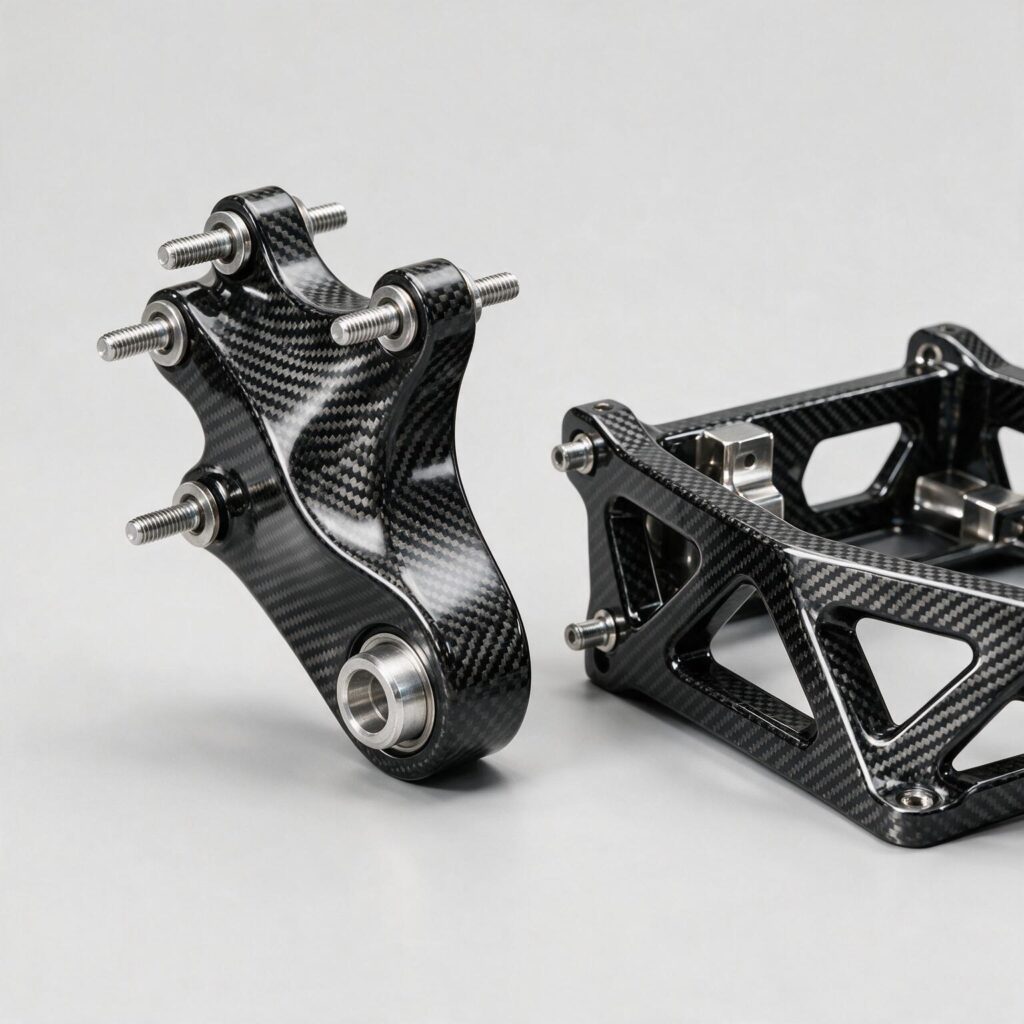
Machined CFRP Components for Brackets and Mounts
Machined CFRP Components for Brackets, Mounts, and Custom Hardware Suspension mounts, sensor brackets, battery interface hardware, and other custom components are machined from CFRP sheet or laminate stock to customer drawings, with consistent tolerances and clean edge quality suited to automotive assembly requirements.