
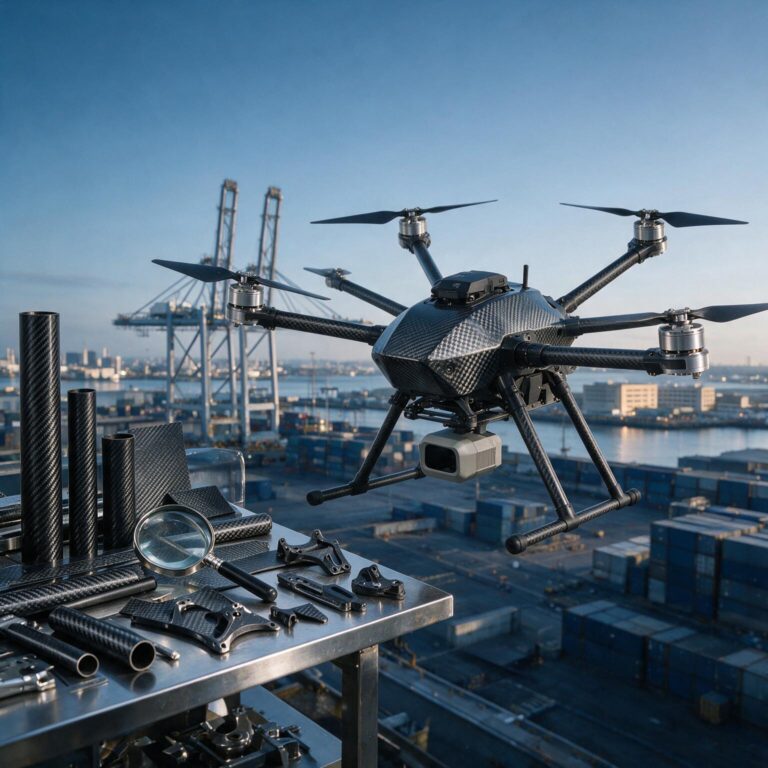
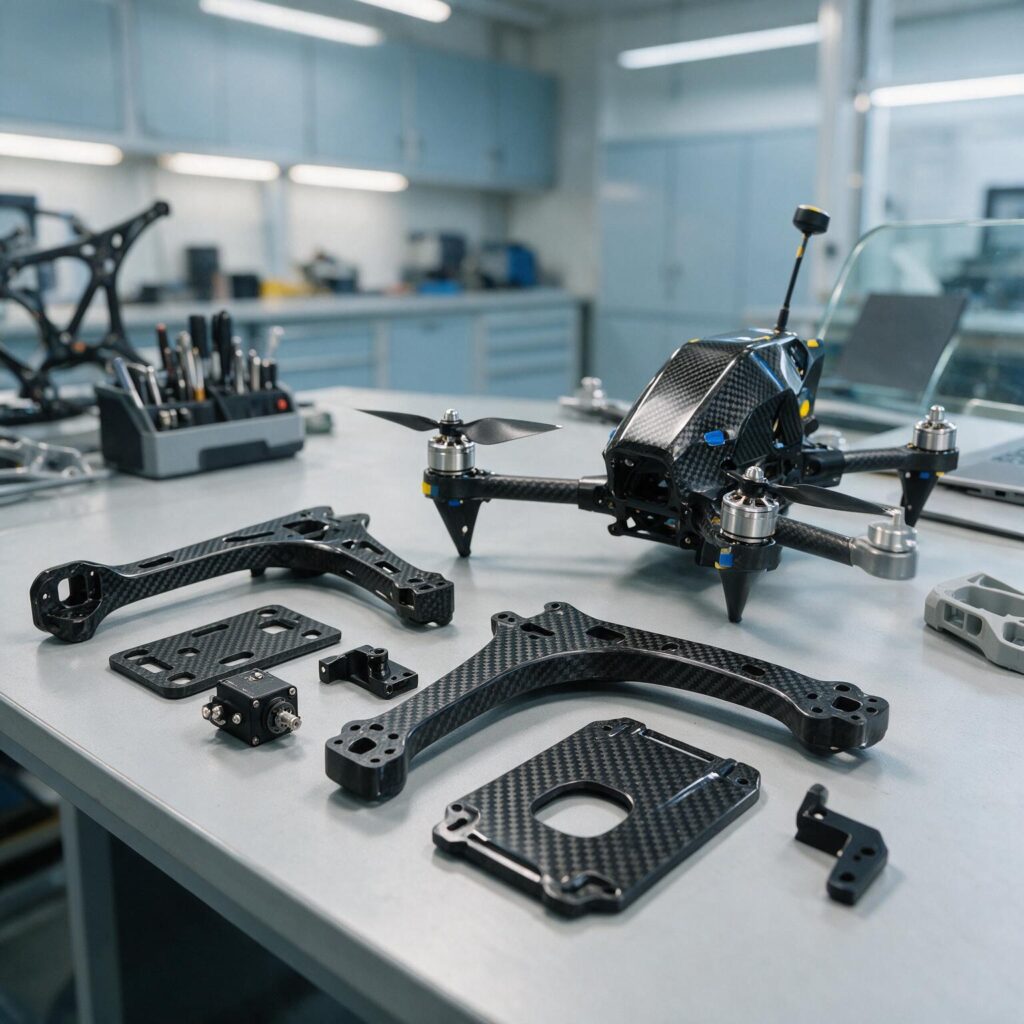
A lighter airframe doesn't just mean better endurance on the same battery. It means you can specify a smaller battery for the same endurance and save further weight, creating a positive spiral. Or you can reinvest the weight savings in payload capacity on a heavier camera, a sensor array, a spray tank with more capacity. On a 1 kg platform, saving 80 grams of structural weight is meaningful. On a 5 kg platform, saving 300 grams is the difference between a competitive product and one that can't match the field.
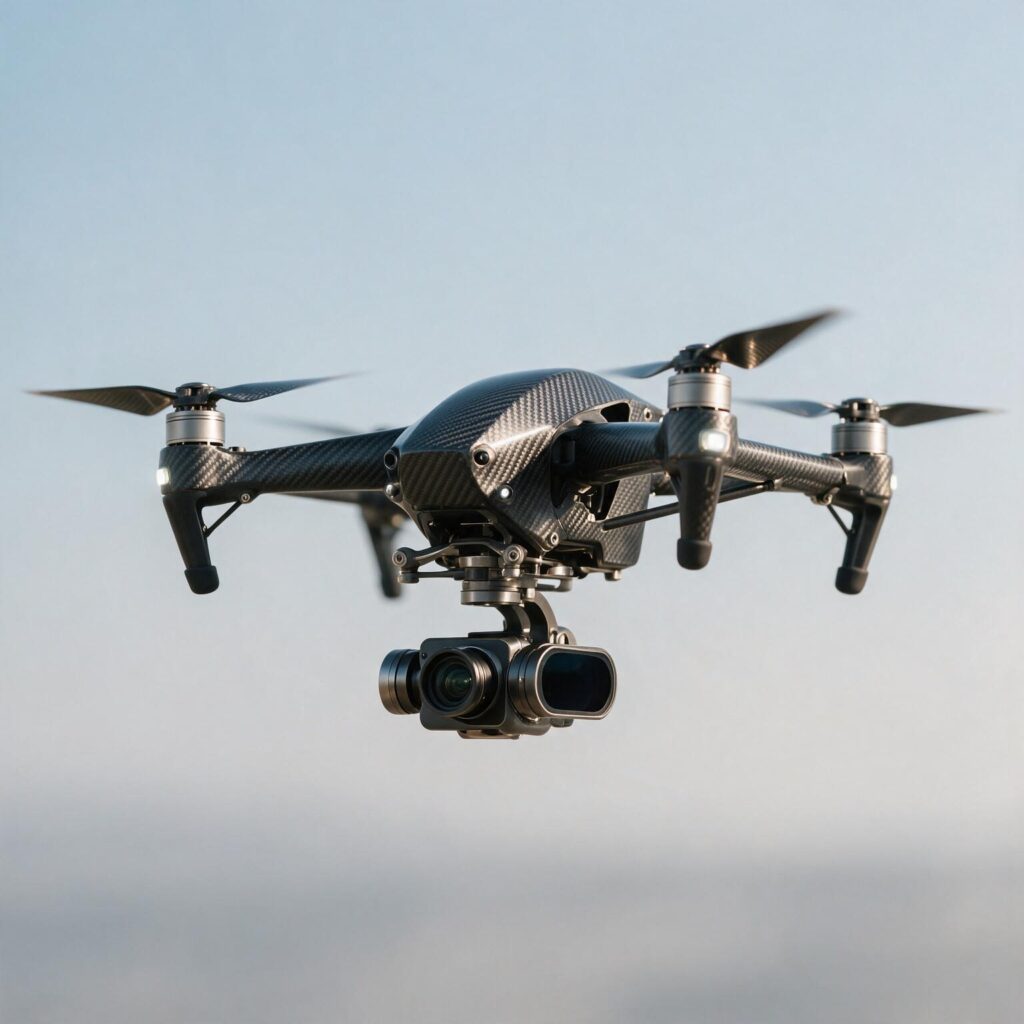
Motor vibration is a real engineering problem in multirotors. Vibration that travels through the frame corrupts IMU readings, blurs camera footage, and accelerates fatigue in mounting hardware. Carbon fiber arms and frames damp vibration differently from aluminium ΓÇö the composite structure absorbs and dissipates energy rather than transmitting it. A well-designed CFRP frame produces a quieter, more stable sensor platform than an equivalent aluminium design.
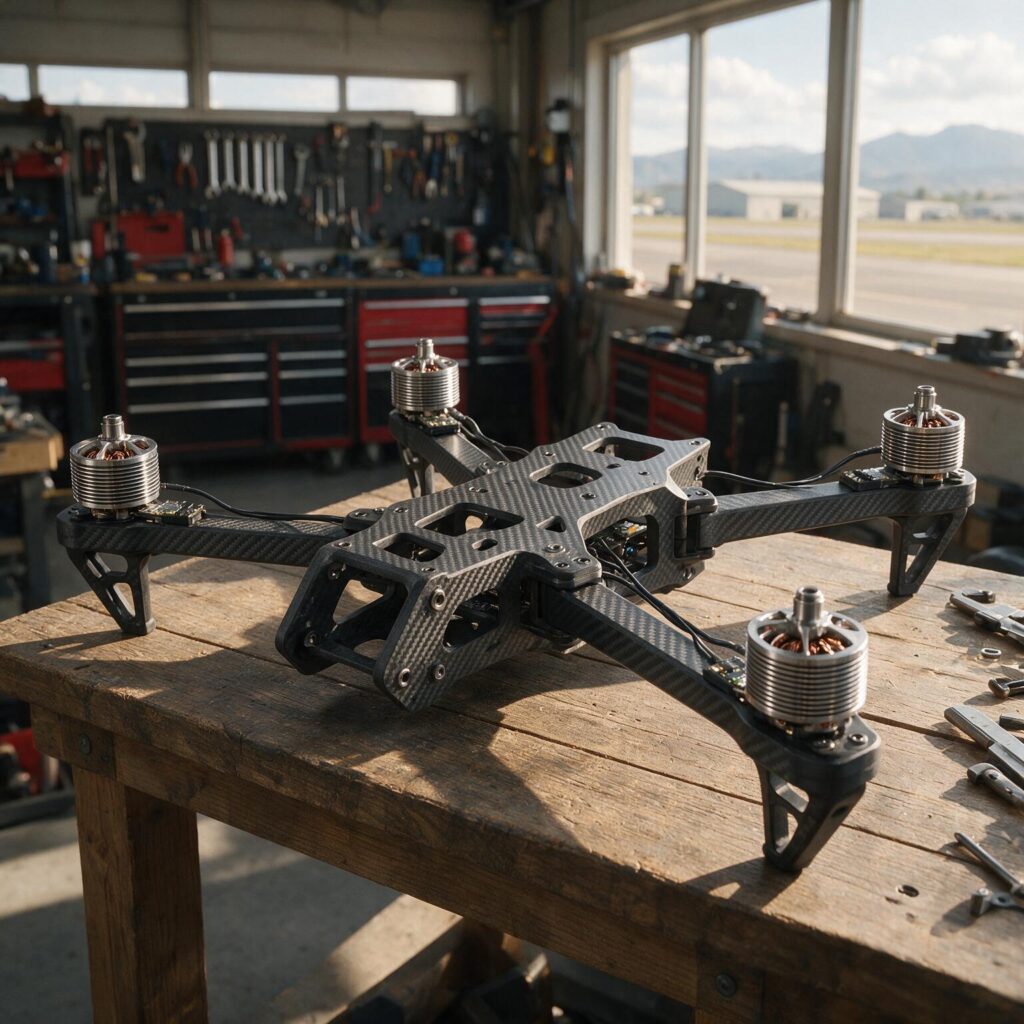
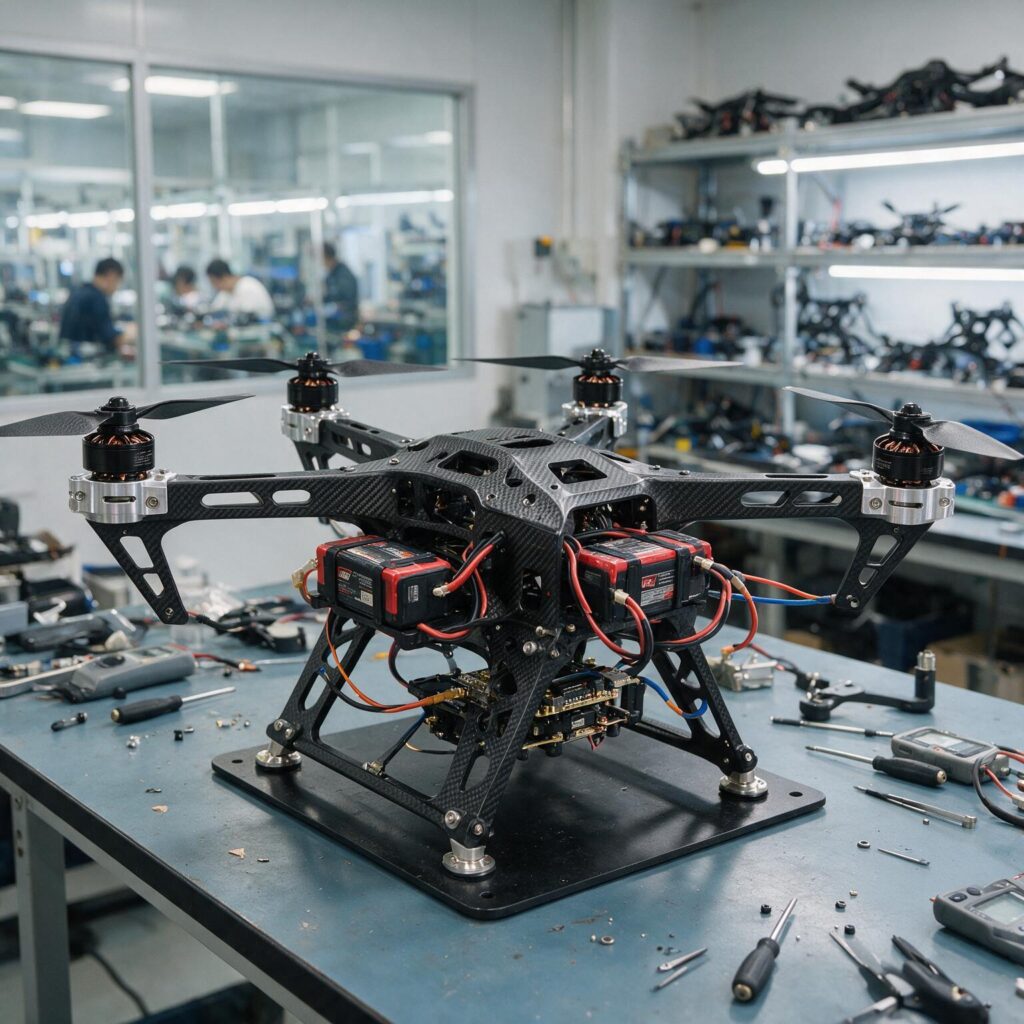
When a multirotor manoeuvres, the thrust distribution across its arms is asymmetric. An arm that flexes under that loading ΓÇö even slightly ΓÇö affects the effective thrust vector and requires the flight controller to compensate. A stiff arm does what the flight controller expects. Carbon fiber motor arms are significantly stiffer than fibreglass at equivalent weight, and comparable or superior to aluminium at a fraction of the mass.
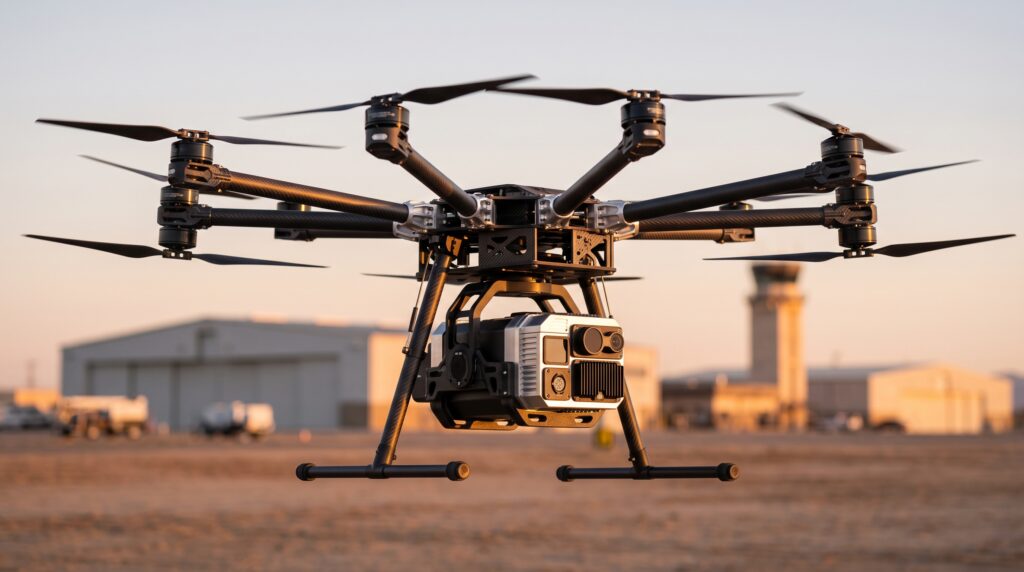
Commercial drones in agricultural, inspection, and delivery applications fly multiple sorties per day. The landing impacts, vibration cycles, and thermal cycling they accumulate are substantial. Carbon fiber composites handle cyclic loading well. The fatigue degradation that eventually limits the service life of metal components does not apply in the same way to properly designed CFRP structures. For operators counting on fleet availability, this matters.
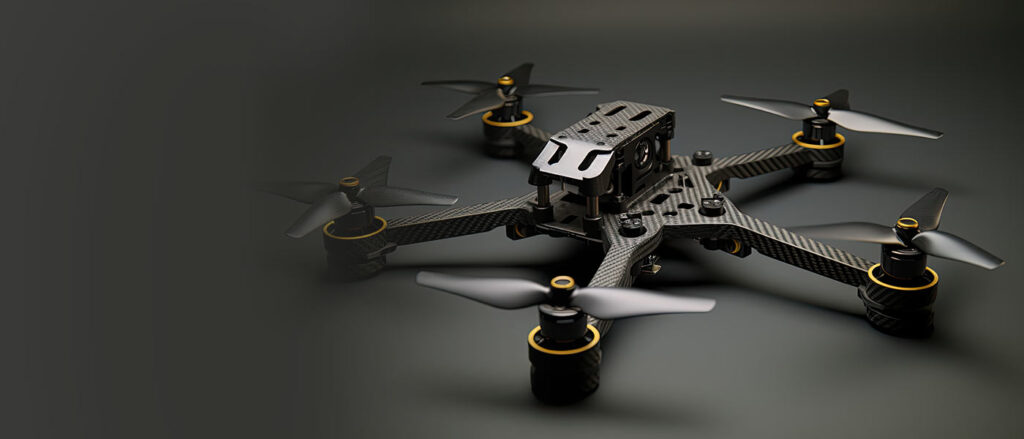
Agricultural and inspection drones operate in humidity, dust, rain, and the full range of field conditions. Carbon fiber does not corrode. It doesn't oxidise or form surface degradation that affects the structural section. A CFRP arm treated correctly will outlast an aluminium equivalent in field deployment conditions.
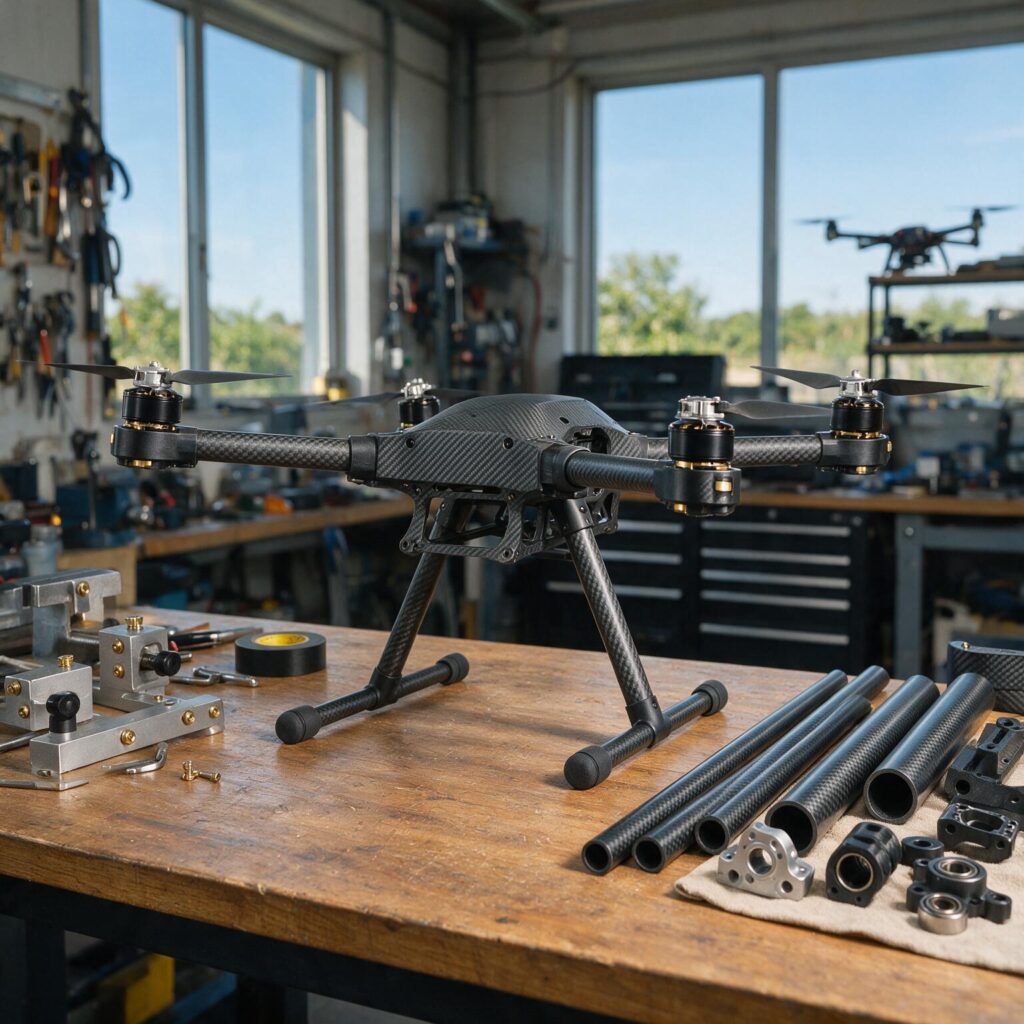
UAVs and Drones
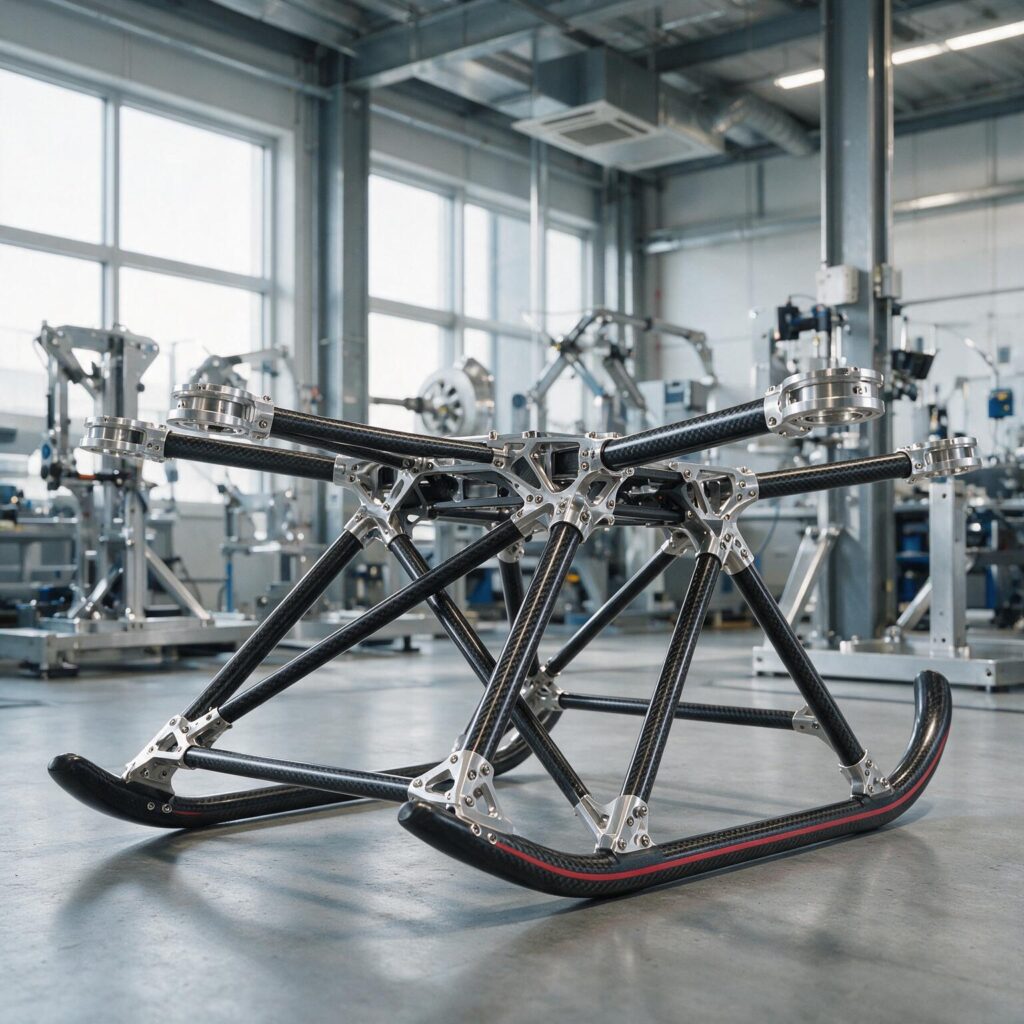
Carbon fiber tubes for drones and UAVs are used for boom arms, motor mounts, frame members, and other lightweight structural components where stiffness-to-weight ratio affects flight endurance and payload capacity.
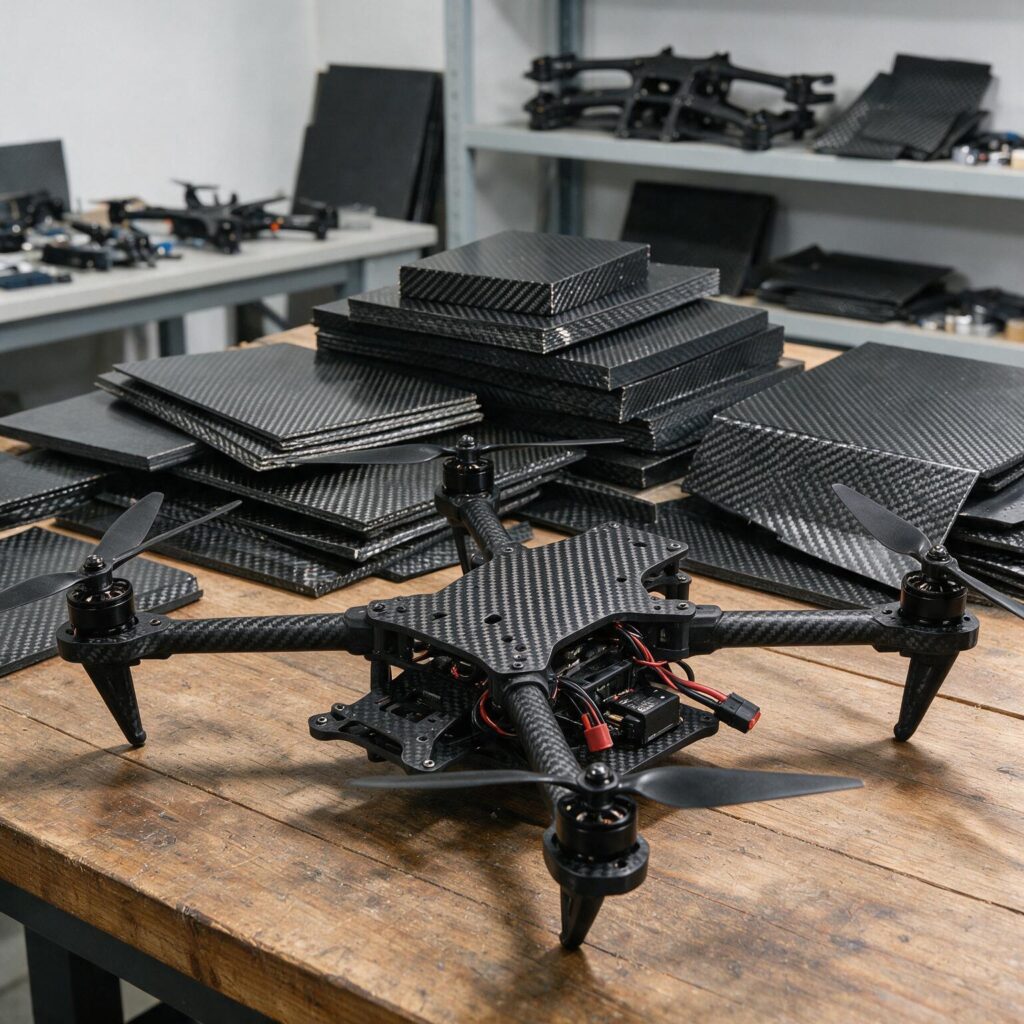
Aerospace and Defense
Aerospace carbon fiber tubes can be used for structural struts, antenna supports, optical assemblies, airframe members, and lightweight support structures requiring high stiffness and low weight.
Robotics and Automation
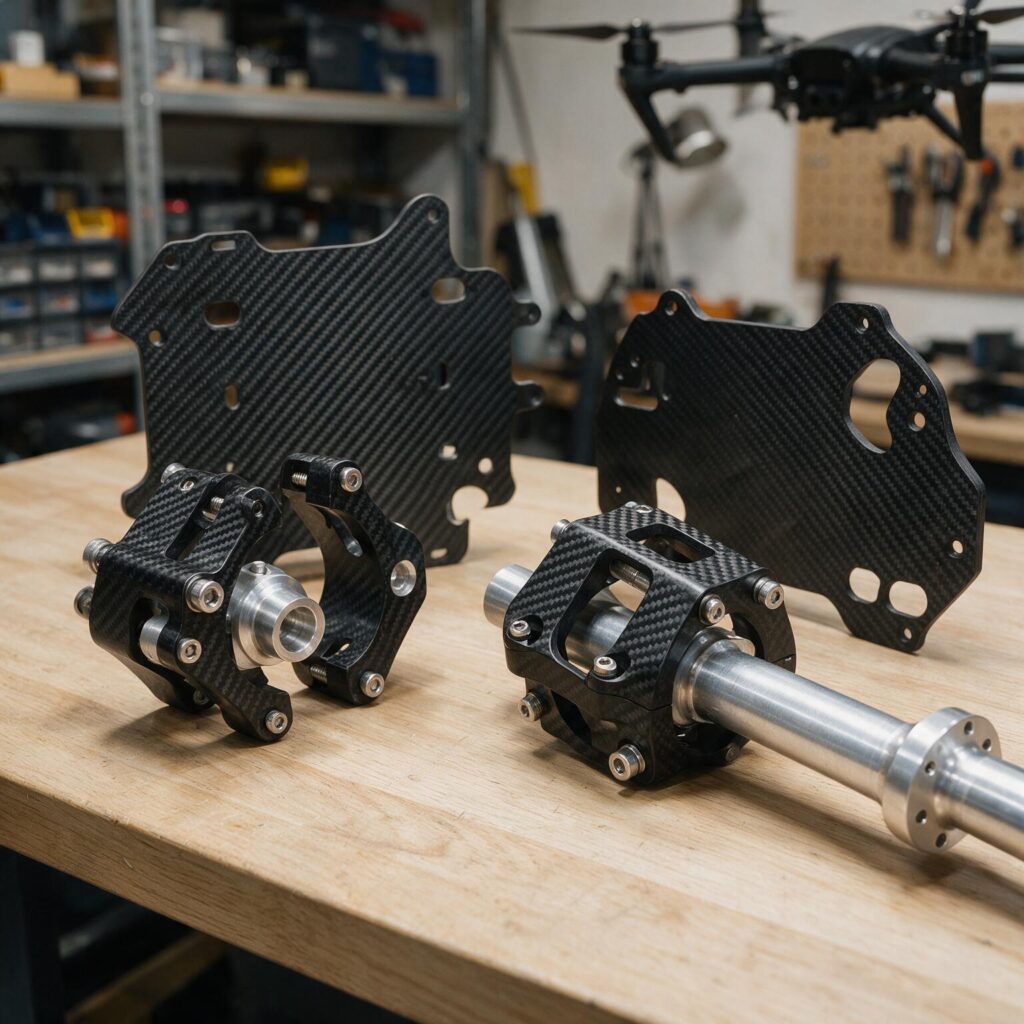
Carbon fiber tubes for robotics are suitable for robot arm segments, linear motion shafts, end-effectors, machine components, and automation structures where low inertia and high stiffness are important.
Automotive and Motorsport
Applications include lightweight chassis structures, suspension linkage tubes, structural members, and motorsport components where reducing mass while maintaining stiffness is critical.
Medical Equipment
Carbon fiber tubes for medical equipment can be used in imaging equipment, rehabilitation devices, medical frames, and surgical robotics where lightweight and mechanically stable structures are required.
Industrial Frames and Support Structures
Pultruded CFRP tubes are suitable for industrial frames, lightweight support structures, machine components, and equipment where high stiffness, low weight, and dimensional consistency are required.