
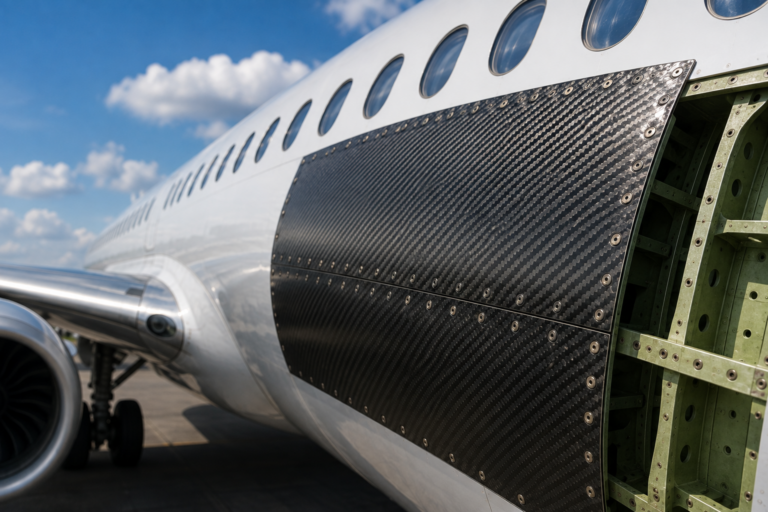
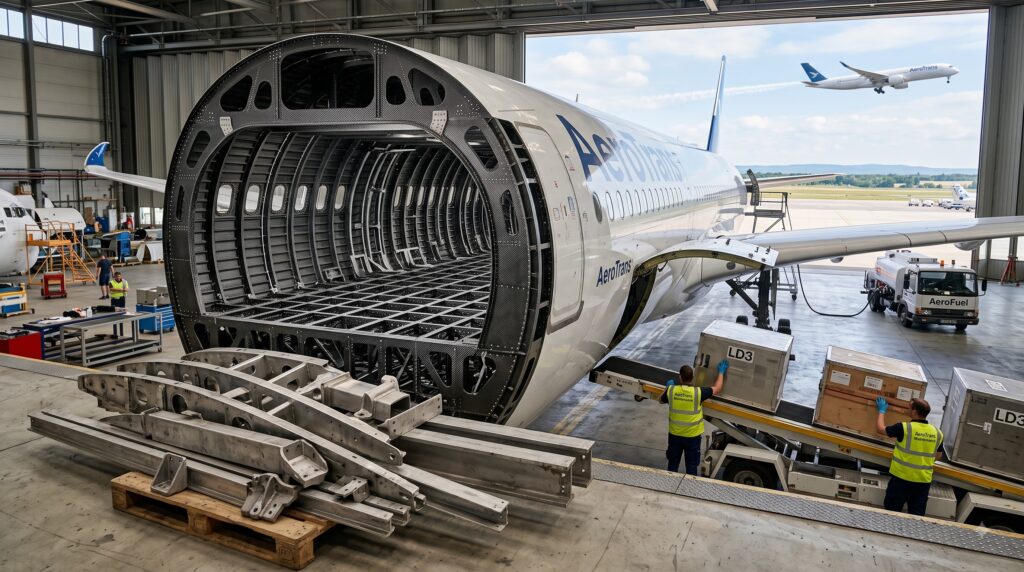
A lighter airframe needs less thrust. Less thrust means smaller engines or less fuel. Less fuel means the aircraft can carry more payload, fly farther, or cost less to operate per flight hour. Saving weight in the structure isn't just about the structure itself. It changes the whole design equation.
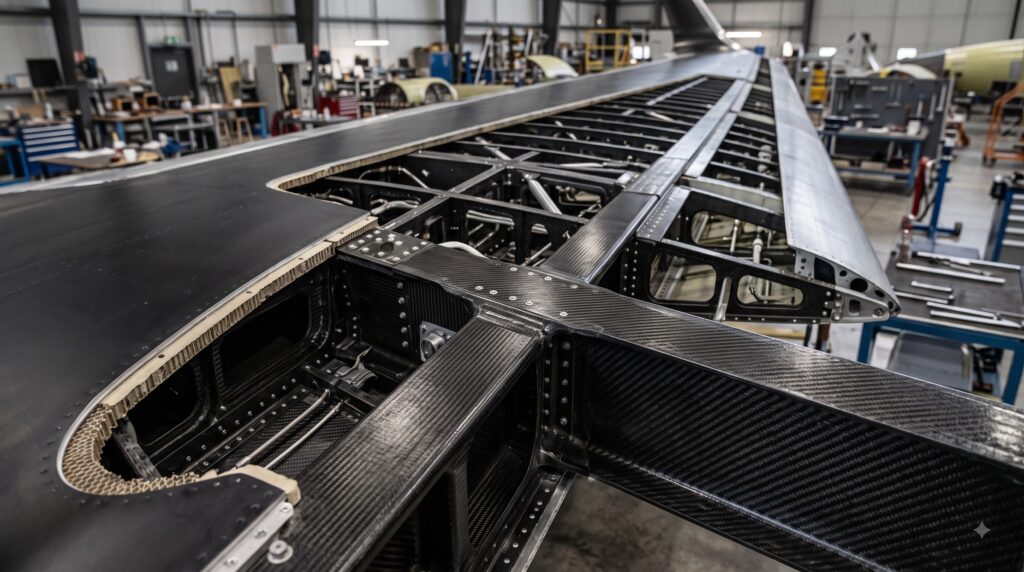
Carbon fiber's specific modulus — stiffness per unit weight — is significantly higher than aluminium. For structures like wing spars, UAV arms, or satellite boom tubes, this means you get parts that don't flex or vibrate under load. That matters for structural integrity, but also for sensor accuracy, control system responsiveness, and overall platform performance.
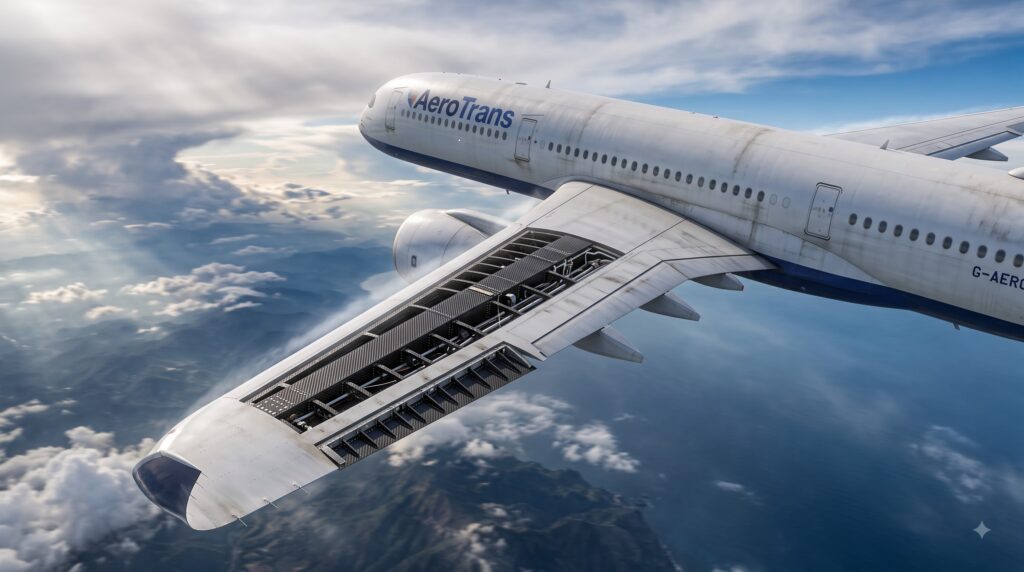
Aircraft structures go through millions of load cycles over a service life. Metal fatigue is a real failure mode — it's the reason aircraft undergo extensive inspection regimes. Carbon fiber composites handle cyclic loading differently. They don't develop the progressive surface cracking that drives metal fatigue. For long-service airframe components, that's a meaningful durability advantage.
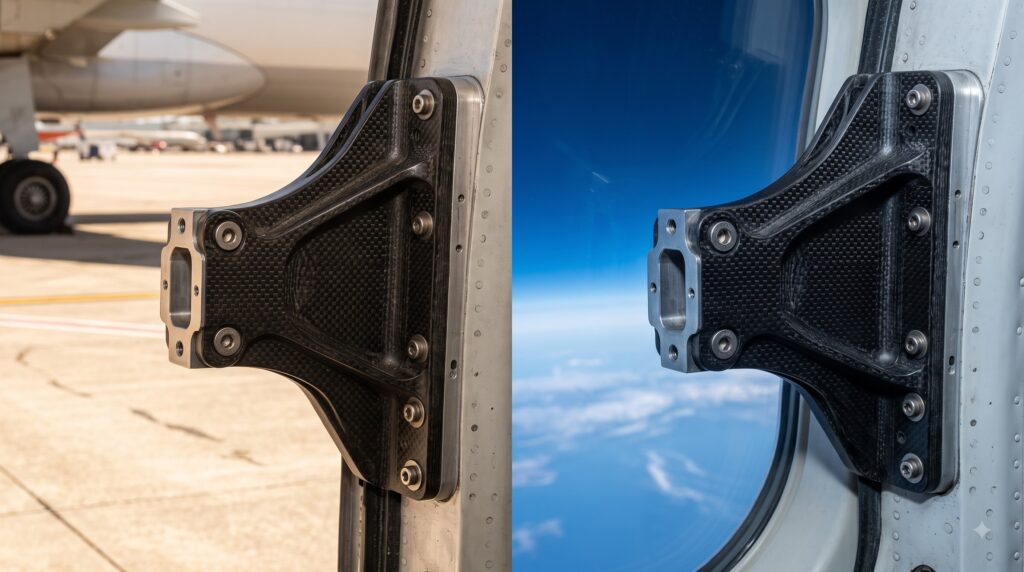
The temperature difference between ground level and cruising altitude isn't trivial. Neither is the difference between sitting on a tarmac in summer and flying through cold, high-altitude air. Carbon fiber maintains its dimensions across that range more predictably than metals, which matters for tight-tolerance assemblies and precision structures.

Aluminium corrodes. Carbon fiber doesn't. That sounds simple, but the maintenance implications are significant — especially for UAVs or aircraft operating in humid coastal or maritime environments.
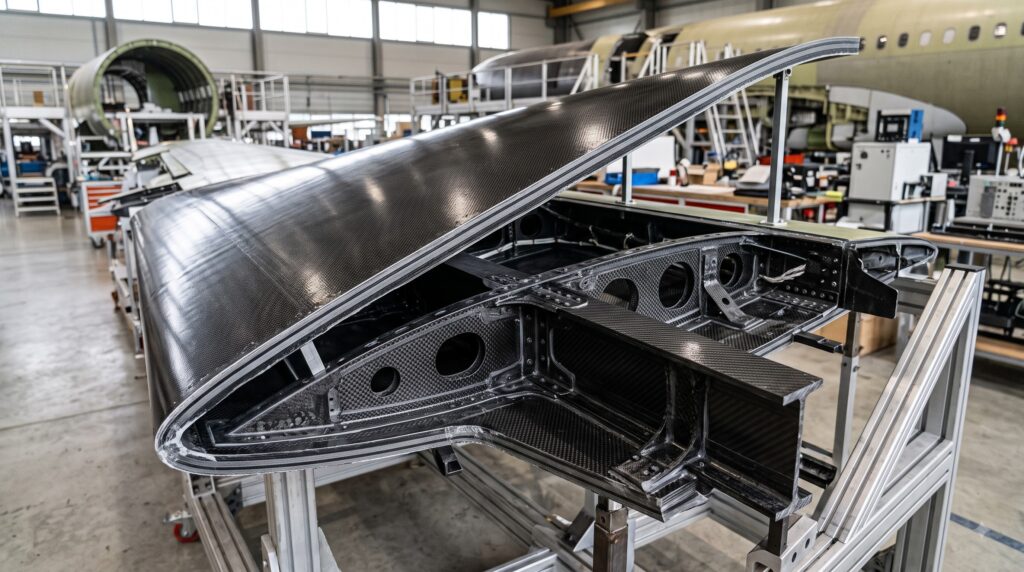
Carbon Fiber Sheets and Laminates for Aircraft Structures
Primary and secondary aircraft structures — ribs, spars, floor panels, fuselage skins, wing components — all benefit from CFRP laminates when weight budgets are tight. We supply both standard and intermediate modulus carbon fiber sheets, with the option to specify fiber orientation for directional stiffness. These aren't generic sheets. If your application needs a particular layup or thickness tolerance, we can work with that.
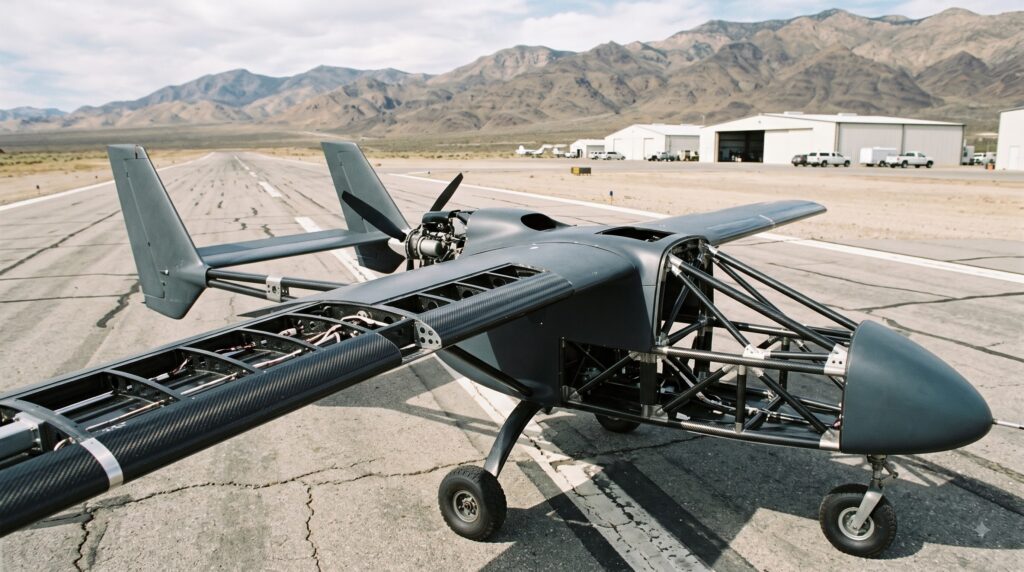
Prepreg Carbon Fiber Tubes for Drone Frames and UAV Arms
Drone manufacturers are some of our most active customers. The structural demands on a UAV frame are actually quite demanding — it needs to handle motor vibration, aerodynamic loading, and the occasional hard landing, while staying as light as possible. Our prepreg round and square tubes are widely used in multirotor and fixed-wing UAV frame construction. We manufacture in consistent batches, which matters when you're producing multiple units and need every tube to perform the same way.
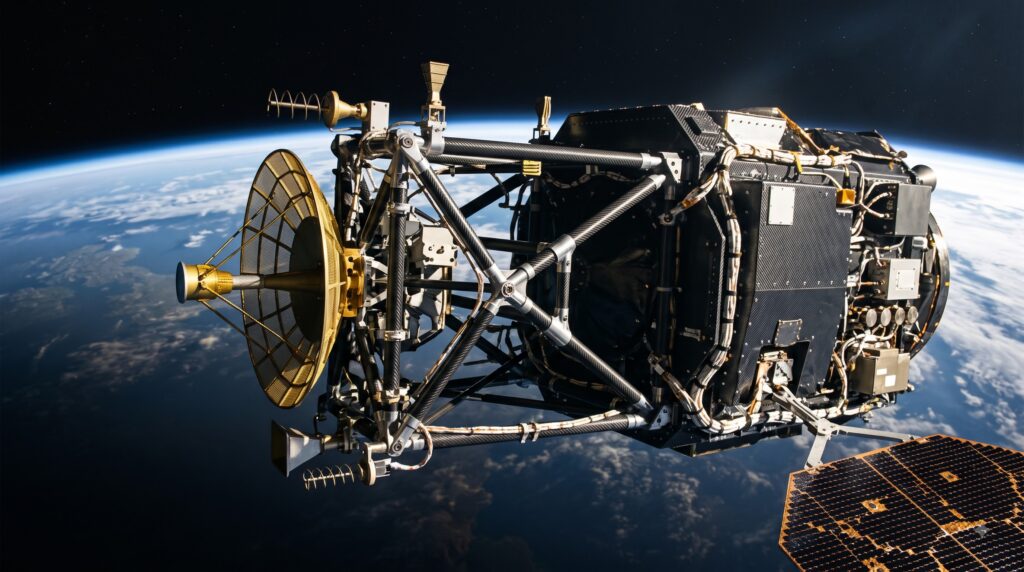
Aerospace-Grade CFRP for Satellite Structures
Satellites are a special case. The environment — vacuum, radiation, extreme thermal cycling between sun-facing and shadow — is genuinely brutal. And once the satellite is up there, nothing can be fixed. The carbon fiber composites used in satellite structural panels need near-zero or closely controlled CTE, because any dimensional change with temperature shifts the alignment of optical sensors, antennas, and communication systems. We supply structural sheets and tubes for satellite bus panels and structural frames, with documented thermal and mechanical properties.
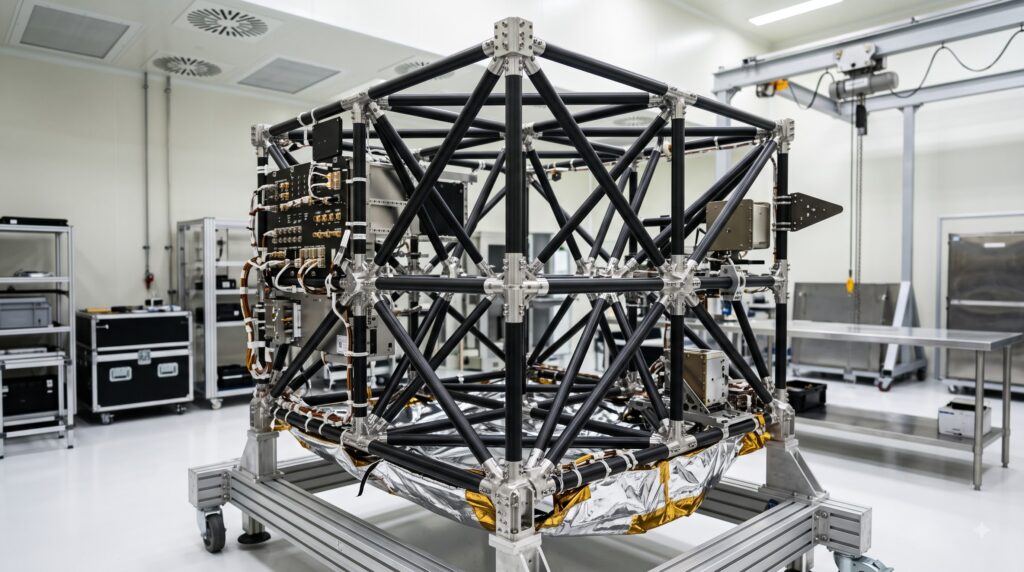
Carbon Fiber Rods and Structural Profiles
Pultruded carbon fiber rods are load-bearing workhorses. Used as stiffeners, push rods, truss members, and frame braces — they offer very high axial stiffness in a compact cross-section with minimal weight. We manufacture in a range of diameters with tight OD tolerances. For aerospace assemblies that involve slender structural members under compressive or tensile loading, these are often exactly what's needed.
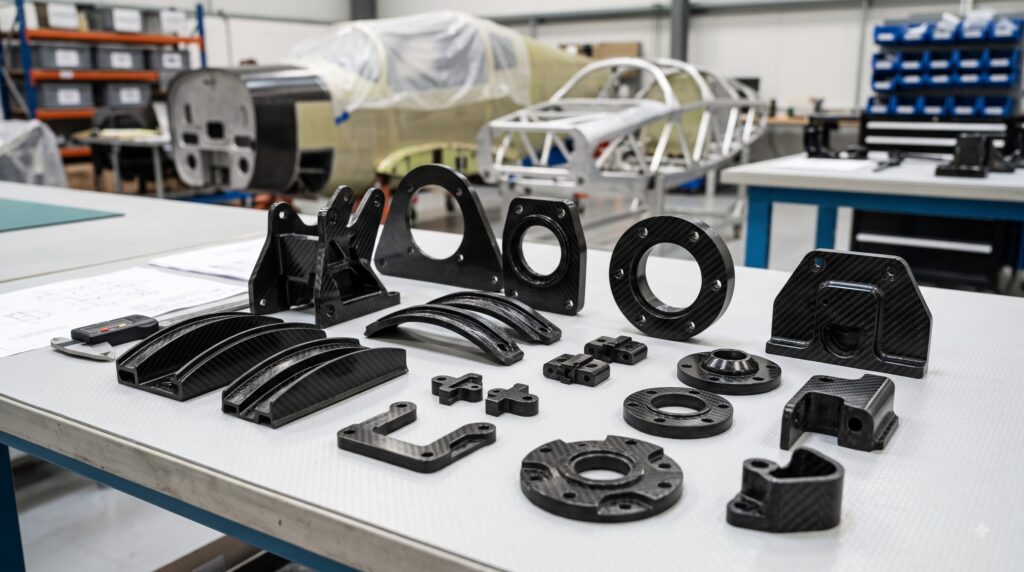
CNC Machined CFRP Components
A lot of aerospace assemblies include parts that can't be formed by extrusion or lamination alone — mounting brackets, custom flanges, rib profiles, and connector elements. We machine these from solid carbon fiber sheet or laminate stock. The tolerances we hold are consistent, the edge quality is clean, and we can work from your drawing or from a dimensional specification.